
As a leading global supplier of custom optical filters for the telecommunications industry, IRIDIAN provides high performance and high-quality telecom filters at competitive prices from prototype to high volumes. Leveraging our more than 20 years’ experience, world-class design and manufacturing capabilities, we can consistently provide the best filter solution for your packaged filter product.
Iridian provides a complete wavelength range of telecom filters for all your component design requirements for all telecom applications including:
Wavelength Multiplexing and De-Multiplexing (MUX & DEMUX)
Multi-wavelength transmission in optical fibers for telecom system: cable, submarine, and wireless backbone (LTE and 5G) applications.
CWDM Filters
Coarse wavelength division multiplexing (CWDM) filters are used to multiplex and de-multiplex wavelength signals in metropolitan networks, access networks, enterprise networks, cable networks and wireless backbone [LTE]. Iridian supplies a large range of custom CWDM filters including:
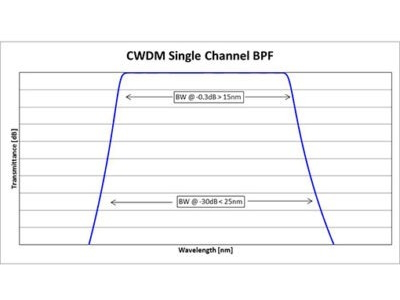
- Single Band CWDM Filters
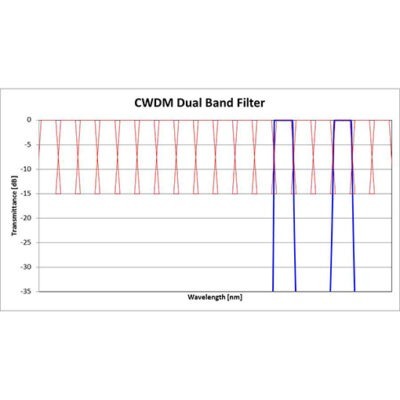
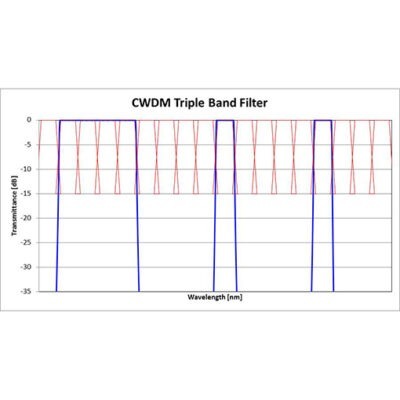
- Triple and Quad Band Filters (transmitting one or more CWDM channels in 3 or 4 separate bands)
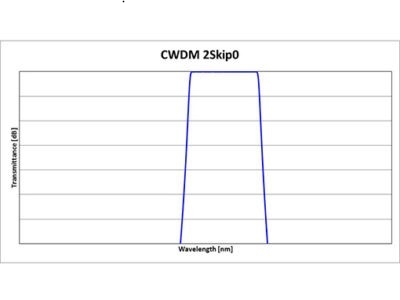
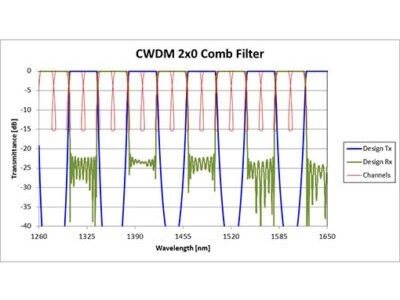
- Multi-channel separation filters (CWDM 2ship0, 4skip0, 6skip0, short and long pass filters)
DWDM Filters
Dense wavelength division multiplexing (DWDM) filters multiplex and de-multiplex wavelength signals in high-speed optical networks. The DWDM filters are spaced on an ITU grid ranging from in O, E, C, and L band. Iridian supplies standard and custom DWDM bandpass and edge pass filters.
Single band filters are used to transmit a single DWDM channel and reflect other DWDM channels. Edge pass filters are used for wavelength band separation or optical add-drop multiplexing (OADM) is required.
Multi-channel separation filters DWDM 4skip0, 6skip0, and 8skip0 filters and Xskip1 filters, DWDM Multiband filters are also available.
Iridian’s edge pass filters have a very sharp transition between reflect and pass bands while still maintaining very low insertion loss and low passband ripple.
Iridian can custom design and manufacture these filters to your specifications if the standard spec is not desirable for your applications.
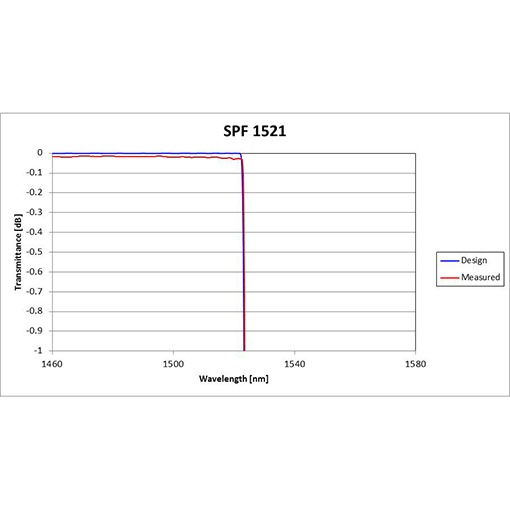
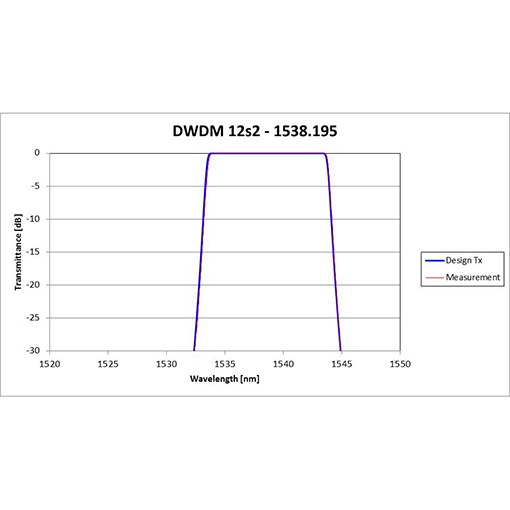
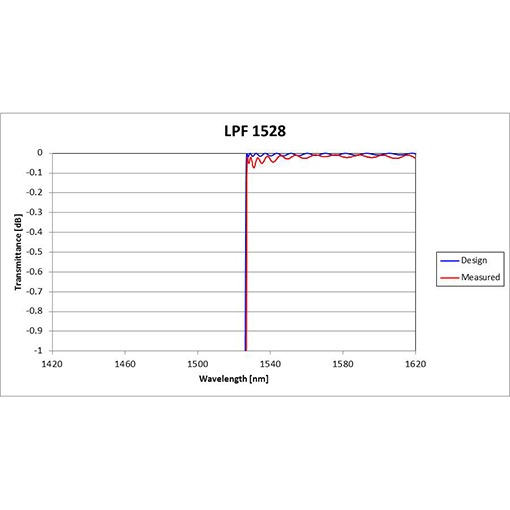
Multi Band WDM Filters
Why use multi-band pass filters?
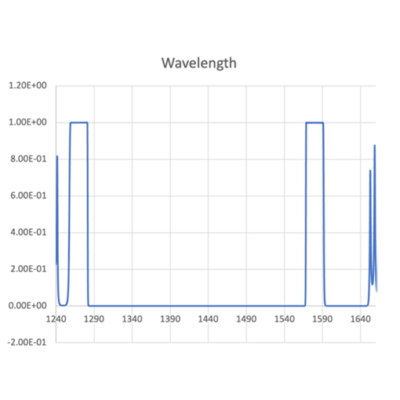
Traditionally, single band pass filters have been used in telecommunication modules to perform wavelength/channel add-drop functionality and are commonly used components in WDM and PON modules.
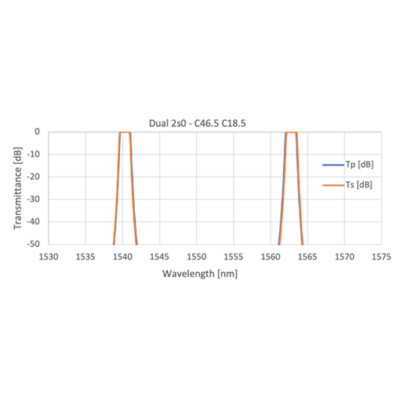
Iridian has developed CWDM, wide band, and narrow band multi-band pass filters to reduce accumulated insertion loss in these module/systems by “grouping” of ITU channels/wavelengths.
With this method, module and system designers can improve the performance of these optical modules by using fewer components, resulting in a reduction in insertion loss and a more compact module size.
Gain Flattening in Optical Amplification
Required to equalize DWDM channels signal intensity after optical amplification
Gain Flattening Filter (GFF) Filters
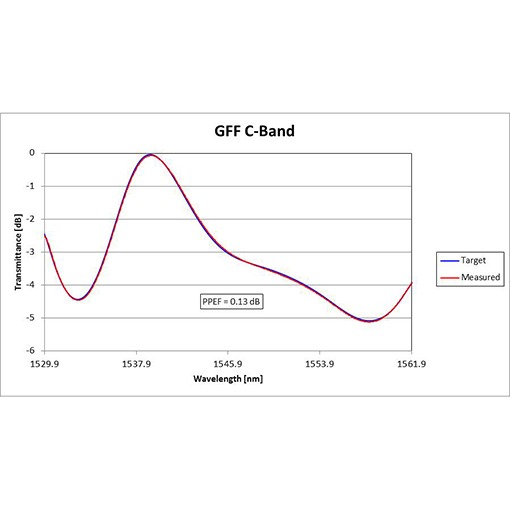
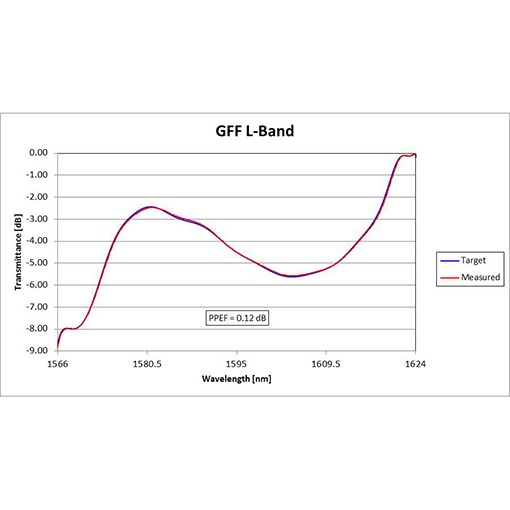
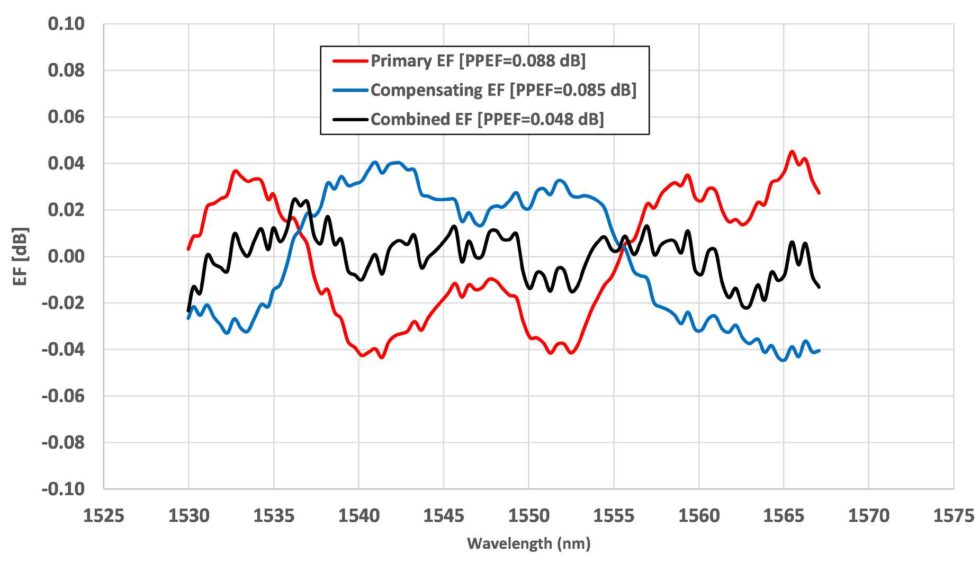
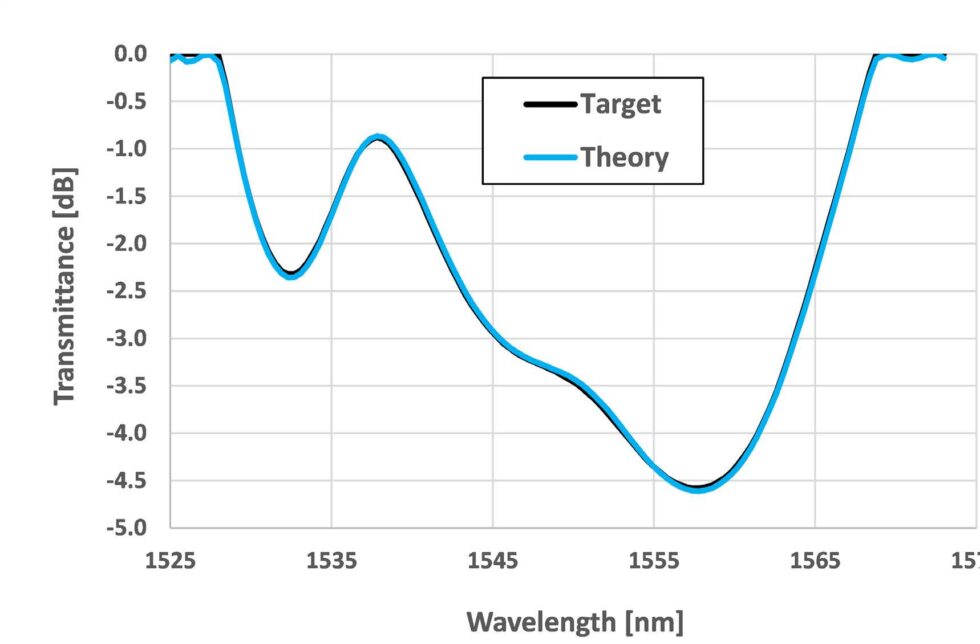
Gain Flattening Filters (GFFs), also known as gain equalizing filters, are used to flatten or smooth out unequal signal intensities over a number of specified channels in the C-, L- and U-Bands. This unequal signal intensity usually occurs after an amplification stage (e.g., EDFA and/or Raman). Typically, GFFs are used in conjunction with gain amplifiers to ensure that the amplified channels all have the same optical gain. GFFs are characterized by their “peak-to-peak error function” (PPEF) which is a measure of how close the GFF transmittance is to the desired target curve. Iridian manufactures GFFs with extremely low PPEF for even the most challenging requirements.
Iridian’s proprietary design and deposition technologies result in GFFs that outperform traditional gain flattening filters. Iridian’s GFFs are varying in complexity from simple parabolic shapes to very difficult shapes possessing high modulation depths and steep slopes.
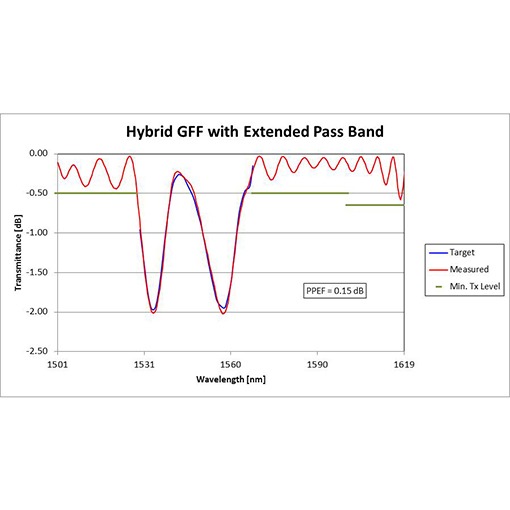
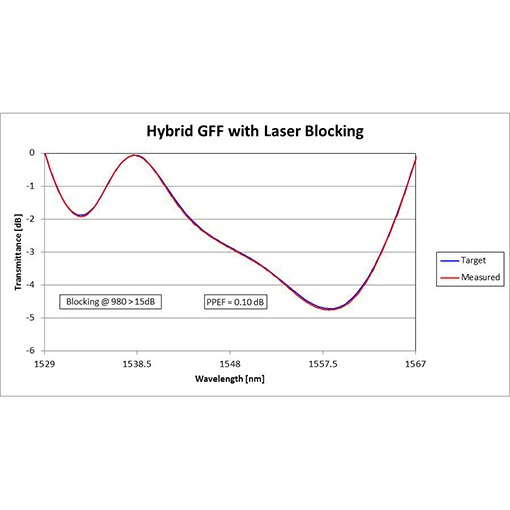
In addition, Iridian also supplies Hybrid-GFFs that can perform additional optical functions. For example, it can block the pump laser providing the optical amplification removing the need for an additional pump wavelength blocking filter. As well, hybrid-GFFs can be designed to pass or block other wavelengths in the 900 to 1700 nm wavelength band.
GFF C-Band and L-Band Product Line
Hybrid GFF Product Line
Compensating GFF Product Line
Premium GFF Product Line
Etalon Filters
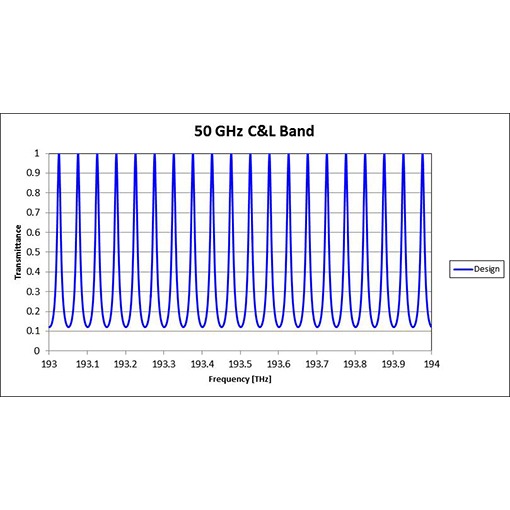
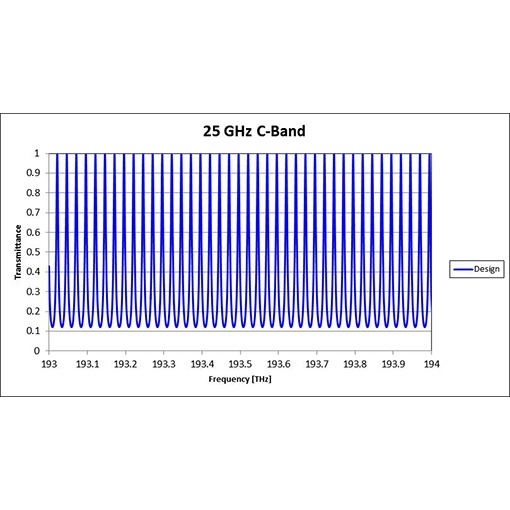
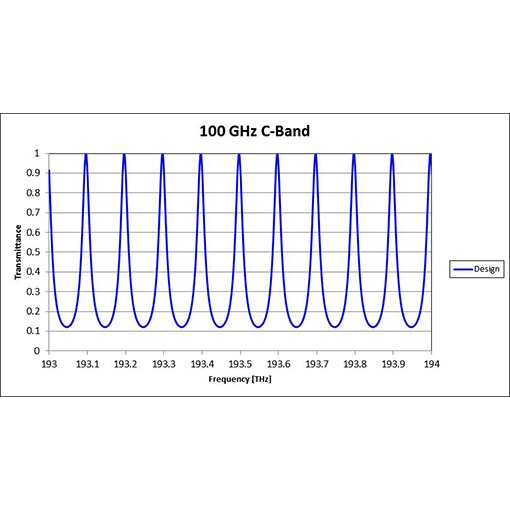
Etalons, when used in transmission mode, have a series of transmittance peaks with periodic frequency spacing and are typically used in telecom for wavelength locking. Etalons are characterized by their Free Spectral Range (FSR) – the frequency spacing between peaks – and their Finesse – which essentially governs the shape of the transmission peaks.
Etalon filters typically consist of a single spacer layer with two reflector stacks on either side. For FSR values below 1000 GHz, the spacer is usually fabricated from a substrate material (rather than grown in thin film deposition). For etalon quality, the parallelism of the substrate needs to be better than 1-5 arc-seconds.
Different substrate materials are chosen depending on the application – fused silica is used when the etalon FSR and peak variation with temperature is to be minimized while Si is used when a high FSR temperature coefficient is required for thermal tuning.
Iridian fabricates high quality fused silica and Si etalons at competitive prices with FSR values in the range of 12.5 GHz to 500 GHz, with finesse values as required by the customer’s application. The etalon substrate material is polished in-house to a very high precision and accuracy: as an example, Iridian is able to fabricate 12.5 GHz solid etalons with a FSR tolerance < +/-0.003 GHz over a wavelength span of 1520-1570 nm. Here are some typical fused silica etalon products manufactured by Iridian. Iridian also manufactures custom etalons specifically tailored to the customer’s applications.
Single Cavity Filters
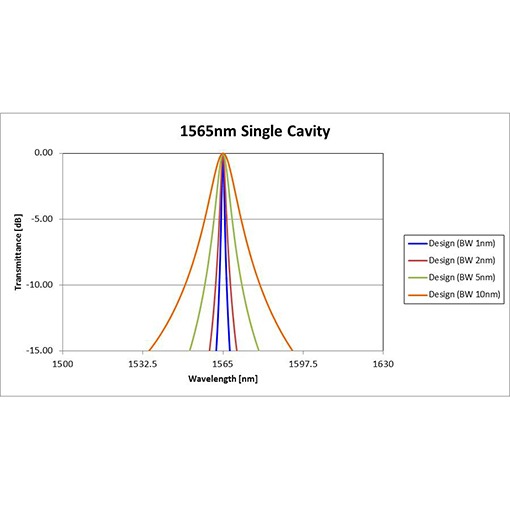
The SC is typically used in telecom applications for wavelength locking on the C- and L-band DWDM ITU grid. In general, single cavity etalon filters can be manufactured for any wavelength in the 350 to 2500 nm range with Full-Width Half Maximum (FWHM) from 0.05 to 10 nm or higher. The graph shows four different single cavity (SC) filters with different bandwidths centered at a wavelength of 1565 nm. For further information on single cavity filters, please contact us.
Linear Transmittance Etalons Filters
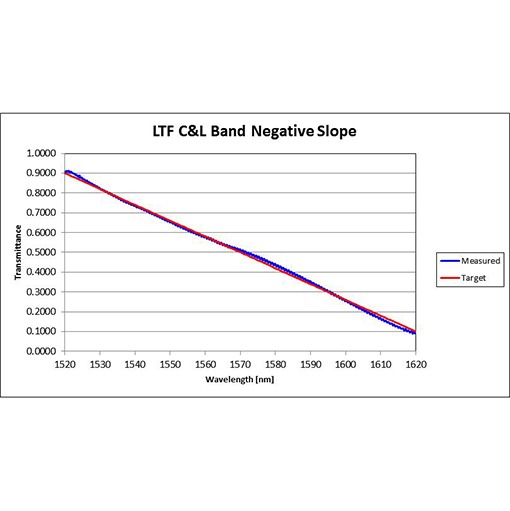
Linear transmittance filters (LTF) are used for wavelength identification, employing a transmittance that changes linearly over a specified wavelength range. The LTF transmittance must be monotonic to provide a one-to-one correspondence between the filter transmittance and a given wavelength.
Iridian is experienced in the design and manufacture of numerous linear transmittance filters. They feature low substrate-etalon ripple, custom slope and dynamic ranges with low linearity tolerance.
In addition to the standard LTF, Iridian can custom-manufacture these filters to your specifications.